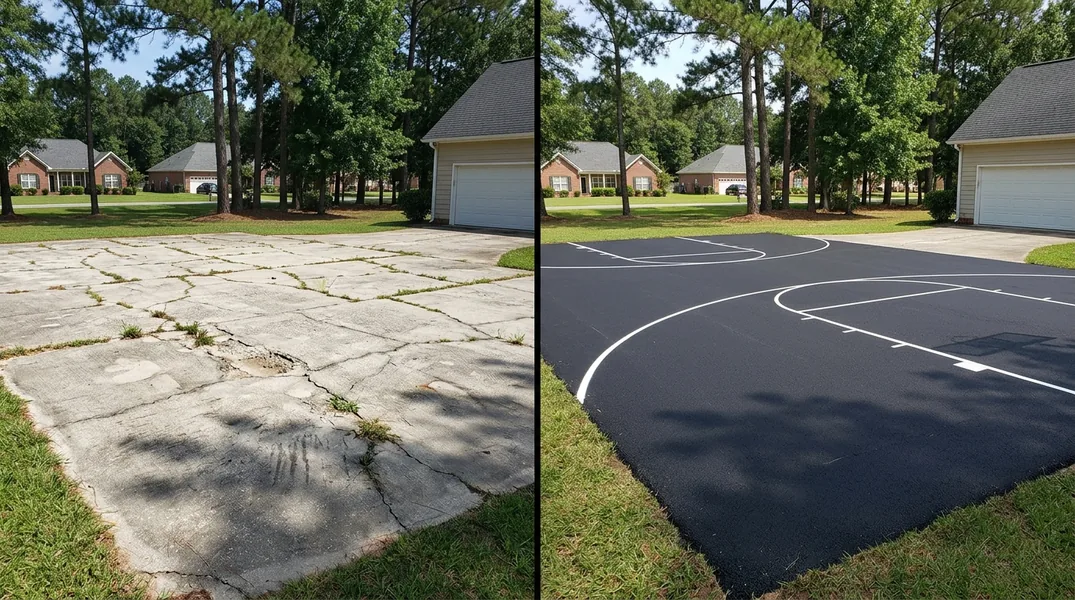
Understanding Graded Clay Lots and Driveway Challenges in Harris County
Harris County's rapid residential growth has brought new subdivisions to areas previously dominated by clay soil and undeveloped land. When developers grade these clay lots for new construction, homeowners face a unique challenge: preparing a stable foundation for their driveways. Clay soil, while compacted during site preparation, can shift and settle unevenly over time, particularly during heavy rains or freeze-thaw cycles common to Georgia's climate. This movement can cause traditional asphalt surfaces to crack, heave, or develop ruts within just a few years.
For new homeowners in Columbus and surrounding areas, understanding soil conditions before choosing a driveway material is essential. A properly engineered driveway must account for the specific properties of clay-based soil, including its tendency to expand when wet and contract when dry. This is why many builders and homeowners are turning to alternative materials like recycled asphalt millings as a first phase solution, or as a permanent cost-effective option that works well with clay foundations.
What Are Asphalt Millings and Why They Work on Clay Foundations
Asphalt millings, also known as recycled asphalt or crushed asphalt driveway material, are reclaimed pieces of asphalt pavement removed during road resurfacing projects. Rather than ending up in a landfill, this material is crushed and reused as a driveway surface. The pieces range from dust-fine particles to chunks roughly the size of a quarter, creating a compacted layer that binds together naturally, especially when exposed to sun and vehicle traffic.
On graded clay lots, asphalt millings driveways offer several advantages. First, they provide excellent drainage, allowing water to percolate through rather than pooling on the surface or saturating the clay beneath. Second, the material compacts over time, creating a stable, firm driving surface without requiring the same level of site preparation that conventional asphalt demands. Third, millings conform naturally to minor settling of the clay base, reducing the likelihood of sudden cracks or potholes. For homeowners in new subdivisions where soil is still settling, this flexibility is a genuine benefit.
Asphalt Millings Driveway Cost in Columbus: What to Budget
One of the biggest advantages of choosing a millings driveway over conventional asphalt is the dramatic difference in initial investment. Pricing for recycled asphalt millings typically ranges from $0.50 to $1.50 per square foot installed, compared to $3.00 to $5.00 per square foot for hot-mix asphalt. For a 500-square-foot driveway, that difference can mean saving $1,000 to $2,000 or more. This makes recycled asphalt an attractive option for homeowners in Harris County subdivisions who want a professional-looking driveway without the premium price tag.
However, crushed asphalt driveway costs can vary based on material availability, delivery distance, and site conditions. Thicker applications (typically 2 to 3 inches) cost more but last longer and perform better on unstable clay foundations. It is important to get a detailed quote that specifies material depth, compaction method, and any site preparation required. Columbus Asphalt Paving offers transparent free estimate consultations to help homeowners understand the true investment for their specific lot and soil conditions. Calling (706) 641-0717 can connect you with a specialist who has experience with Harris County's unique soil challenges.
Installation Process for Recycled Asphalt on Clay Lots
Proper installation is critical to the longevity of an asphalt millings driveway. The process begins with site assessment and grading to ensure water flows away from the home and standing water does not accumulate. On clay lots, the existing soil is compacted and sometimes treated with a stabilizer to improve its load-bearing capacity. A base layer of larger crushed stone (often 4 to 6 inches) is then laid and compacted to create a stable foundation that distributes vehicle weight and allows drainage.
The recycled asphalt millings are then spread in layers, typically 2 to 3 inches total, and compacted using specialized equipment. The compaction process is essential because it forces the smaller particles and dust to fill gaps between larger pieces, creating a self-binding matrix. Initial traffic and exposure to sun heat further fuse the material together over the first few weeks. Unlike conventional Asphalt Driveway Paving & Installation, which requires precise temperature control and curing time, millings can be used immediately. For homeowners eager to move into new subdivisions, this quick installation and immediate usability is a significant practical advantage.
Maintenance and Long-Term Performance of Millings Driveways
A recycled asphalt driveway requires some ongoing maintenance to perform optimally. Over time, the top layer of millings can loosen and scatter, especially along edges or in areas with heavy traffic. Annual raking and re-compaction, or the addition of fresh millings, helps maintain a smooth, firm surface. Some homeowners choose to spray a light dust-control agent in dry seasons to reduce loose particles, though this is optional. Compared to the maintenance demands of conventional asphalt, which may require Driveway Repair or Asphalt Resurfacing & Overlay within 5 to 10 years, millings offer a lower-stress ownership experience.
The lifespan of a well-maintained millings driveway typically ranges from 5 to 7 years before requiring a fresh layer of material, though this varies based on climate, traffic volume, and maintenance diligence. For homeowners in growing Harris County subdivisions where soil settlement may continue over several years, this moderate lifespan is actually advantageous. It allows the underlying clay to fully stabilize before committing to a permanent, rigid asphalt surface. Many homeowners start with millings, observe how their lot settles over time, and then upgrade to conventional asphalt once the foundation is proven stable. This phased approach reduces the risk of costly driveway damage from unexpected soil movement.
Transitioning from Millings to Permanent Asphalt in Columbus
For many homeowners, a recycled asphalt millings driveway serves as an intelligent temporary or long-term solution while they decide on their next steps. After a few years of living on the property, once the clay foundation has stabilized and the home has settled, transitioning to a conventional asphalt surface becomes a realistic option. The existing millings layer actually provides a good base for subsequent asphalt work, reducing some preparation costs compared to starting from bare soil.
When you are ready to upgrade or if you initially prefer a permanent solution, Columbus Asphalt Paving is ready to help. Whether you choose to start with a budget-friendly millings driveway or invest directly in professional Asphalt Driveway Paving & Installation, our team understands the specific challenges of new construction on clay lots in Harris County. We recommend calling (706) 641-0717 or submitting a free estimate request to discuss your options. Our specialists can evaluate your soil conditions, recommend the best material choice for your timeline and budget, and ensure your driveway performs reliably for years to come.
Looking for a professional asphalt paving contractor in Columbus? Columbus Asphalt Paving responds fast for all your asphalt paving needs.
Get a Free Quote