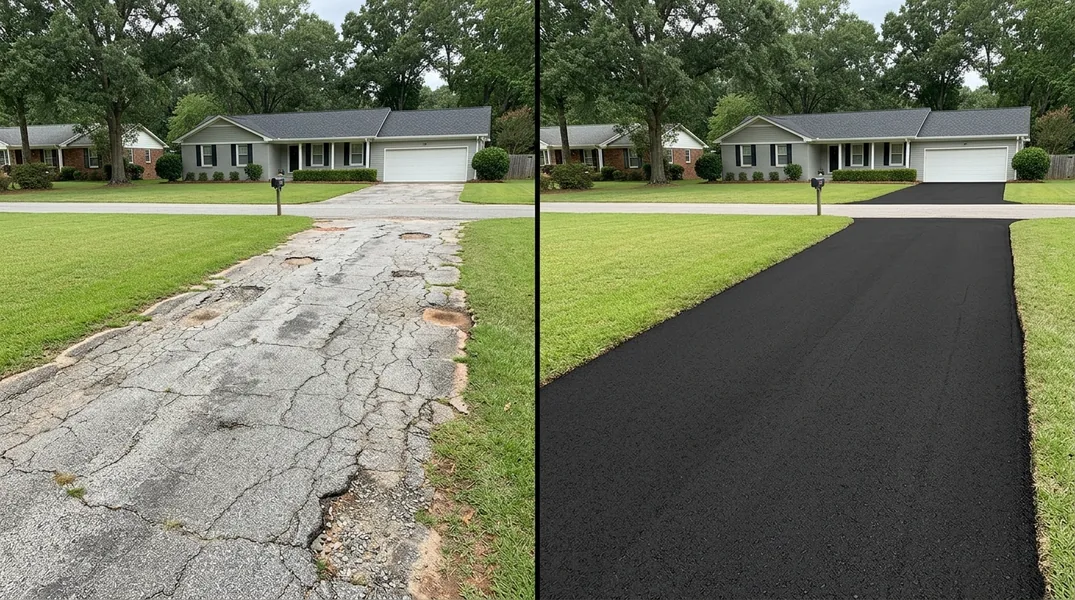
The Red Clay Problem: Why Columbus Driveways Suffer After Heavy Rain
If you live in Columbus and have noticed your asphalt driveway becoming soft, spongy, or developing new cracks after summer thunderstorms, you are not alone. The culprit is often the region's distinctive red clay soil, which behaves very differently from the soil found in other parts of Georgia. This clay has unique properties that interact poorly with asphalt, especially when moisture becomes trapped beneath the surface.
Red clay is highly expansive and absorbs water like a sponge. When summer storms dump heavy rainfall on your driveway, water does not simply run off the surface. Instead, it seeps down through small cracks and imperfections in the asphalt, saturating the clay base underneath. As the clay absorbs this moisture, it swells and becomes unstable. The asphalt layer above, which relies on a firm foundation, begins to shift and soften. This process can happen surprisingly quickly, sometimes within just a few hours of intense rain. Homeowners in Columbus often wake up after a storm to find their once-solid driveway feeling mushy underfoot.
How Water Infiltration Weakens Your Asphalt Foundation
The real damage from red clay and summer storms occurs below the surface, in a layer most homeowners never see. Beneath your asphalt sits a base layer, usually made of crushed stone or gravel, that is designed to provide drainage and structural support. When the red clay beneath this base layer becomes saturated, it loses its load-bearing capacity. Think of it like the difference between a damp sponge and a soaked one. The wet clay can no longer support the weight of vehicles driving over the asphalt, causing the surface to flex, crack, and eventually fail.
This weakening process is accelerated by the freeze-thaw cycle that occurs during winter months, even in Columbus where freezing is less severe than northern states. When water trapped in the soil freezes, it expands with tremendous force, pushing the asphalt upward in a phenomenon called frost heave driveway damage. When temperatures rise again, the soil settles unevenly, leaving your driveway with depressions, cracks, and soft spots. This cycle repeats every winter and spring, progressively damaging the structural integrity of your driveway. If your driveway is experiencing these issues, Driveway Repair should be your next step before the damage becomes irreversible.
Pothole Repair & Asphalt Patching: When Quick Fixes Are Not Enough
Pothole Repair & Asphalt Patching are common responses to storm damage, and for small, isolated damage, these solutions can work well. A professional crew can clean out the damaged area, apply a tack coat, and fill it with hot mix asphalt, creating a seal that prevents further water infiltration. However, patching only addresses the symptom, not the underlying problem. If your driveway is soft throughout or shows multiple areas of damage, patching individual holes is like putting a band-aid on a larger wound.
Many homeowners in Columbus make the mistake of repeatedly patching the same driveway year after year. Each summer brings new storms, more water infiltration, and more soft spots. The patches fail because the foundation beneath them remains unstable. Eventually, you will reach a point where the cost of repeated patching exceeds the cost of a more permanent solution. The key question becomes whether your driveway needs spot repairs or if it is time to consider a more comprehensive approach to the problem.
Repair or Replace Asphalt Driveway: Making the Right Decision for Your Home
Deciding whether to repair or replace your asphalt driveway depends on several factors, including the age of the driveway, the extent of the damage, and the condition of the base layer. If your driveway is relatively young (less than 10 years old) and the damage is limited to a few soft spots or potholes, Asphalt Resurfacing & Overlay may be a cost-effective middle ground. This process involves cleaning the existing surface and applying a new layer of asphalt over the top, which can restore the structural integrity without the expense of complete removal and replacement.
However, if your driveway is older, shows widespread softness, or has experienced significant frost heave driveway damage, replacement may be the only truly lasting solution. A new driveway allows contractors to properly address the red clay problem by installing improved drainage systems, using the correct base materials, and applying modern asphalt formulations designed for the climate. While replacement is more expensive upfront, it provides 15 to 20 years of reliable service without the recurring repair costs. To understand which option makes sense for your specific situation, contact Columbus Asphalt Paving at (706) 641-0717 for a free estimate and professional assessment.
Protecting Your Driveway from Red Clay Damage: Prevention Strategies
While you cannot change the soil beneath your driveway, you can take steps to minimize water infiltration and reduce the damage caused by red clay expansion. The first and most important step is to seal your asphalt regularly. A quality seal coating creates a waterproof barrier that prevents water from seeping into cracks and reaching the clay base below. In the humid climate of Columbus, seal coating should be applied every two to three years to maintain protection.
Second, maintain proper drainage around your driveway. Ensure that water from gutters, downspouts, and grading slopes away from the asphalt surface rather than pooling on it. If water consistently collects in certain areas after rain, this is a sign of poor drainage that will eventually lead to soft spots and failure. Third, address cracks promptly before they expand. Small cracks can be sealed with crack filler to prevent water intrusion. By combining regular maintenance with professional inspections, you can extend the life of your driveway and reduce the likelihood of serious storm damage. If you notice soft areas or new cracks forming, do not wait for the next storm to worsen them. Call Columbus Asphalt Paving at (706) 641-0717 today to discuss your options.
Asphalt Driveway Paving & Installation Cost in Columbus: What to Budget
Understanding the pricing for driveway work helps homeowners make informed decisions. Asphalt Driveway Paving & Installation costs in Columbus vary based on the size of the driveway, the condition of the existing base, and the scope of work required. A simple seal coating or crack filling runs significantly less than a full replacement, but offers only limited protection against red clay damage. Patching and pothole repair are inexpensive short-term fixes, typically costing a few hundred dollars per repair, but may need to be repeated multiple times over several years.
A complete driveway replacement is a larger investment but provides long-term value and peace of mind. The cost depends on the square footage of your driveway and the quality of materials used. Resurfacing with an overlay falls between patching and replacement in terms of cost and longevity. Rather than guessing at what your project will cost, reach out to Columbus Asphalt Paving for a detailed free estimate. Our team will evaluate your driveway, explain your options, and provide transparent pricing so you can budget accordingly. Call us at (706) 641-0717 to schedule your consultation.
Looking for a professional asphalt paving contractor in Columbus? Columbus Asphalt Paving responds fast for all your asphalt paving needs.
Get a Free Quote